
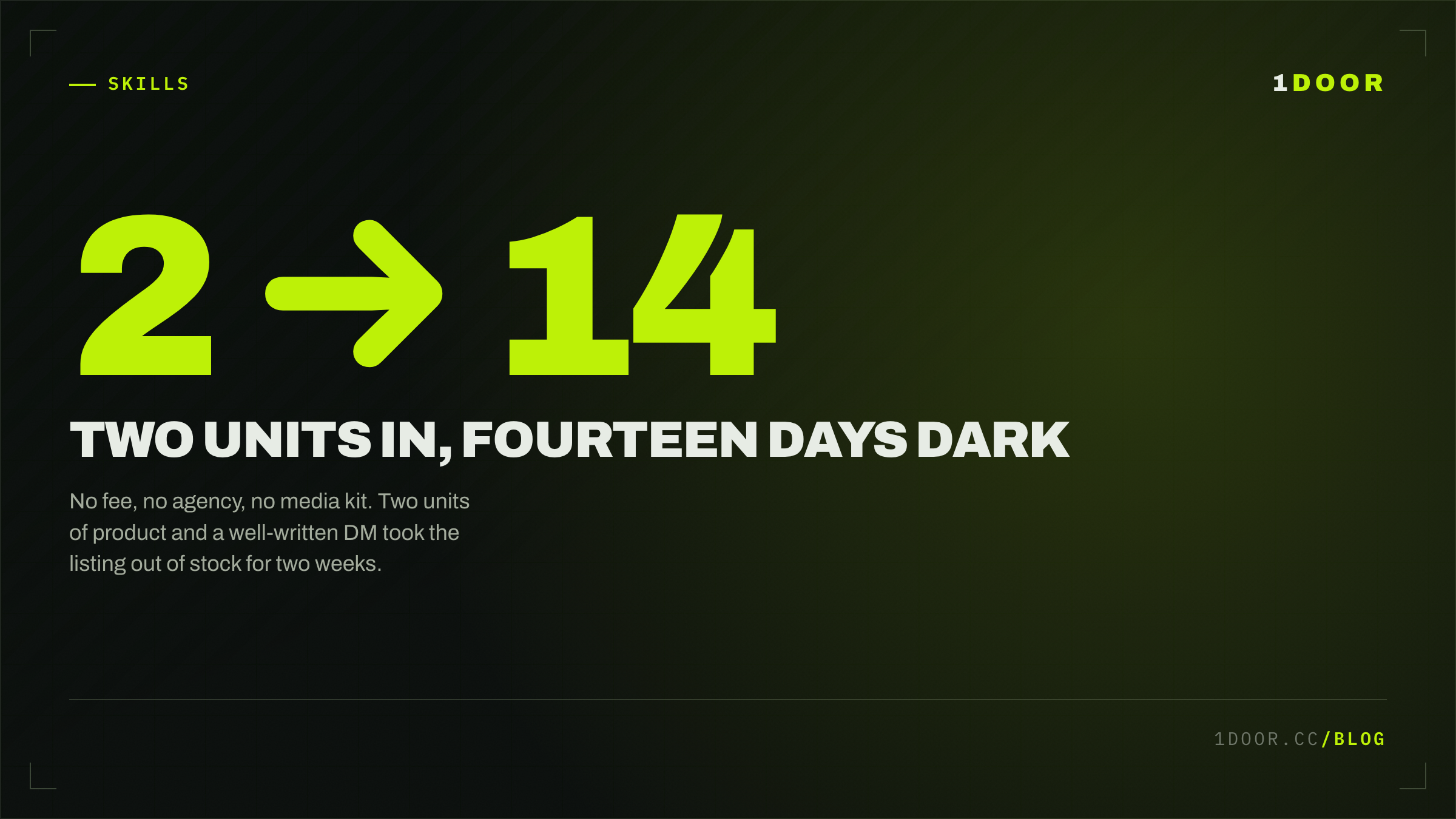
Two units of product. Zero pounds. Fourteen days out of stock.
That is not a humblebrag, it is an indictment — of my own planning, and of an industry that has convinced brands the hard part is paying for reach.
What I was supposed to do
Brief an agency. Request media kits. Compare CPMs on a spreadsheet where every creator looks like a media buy. Negotiate a four-figure fee, a two-week approval cycle and usage rights I would never exercise.
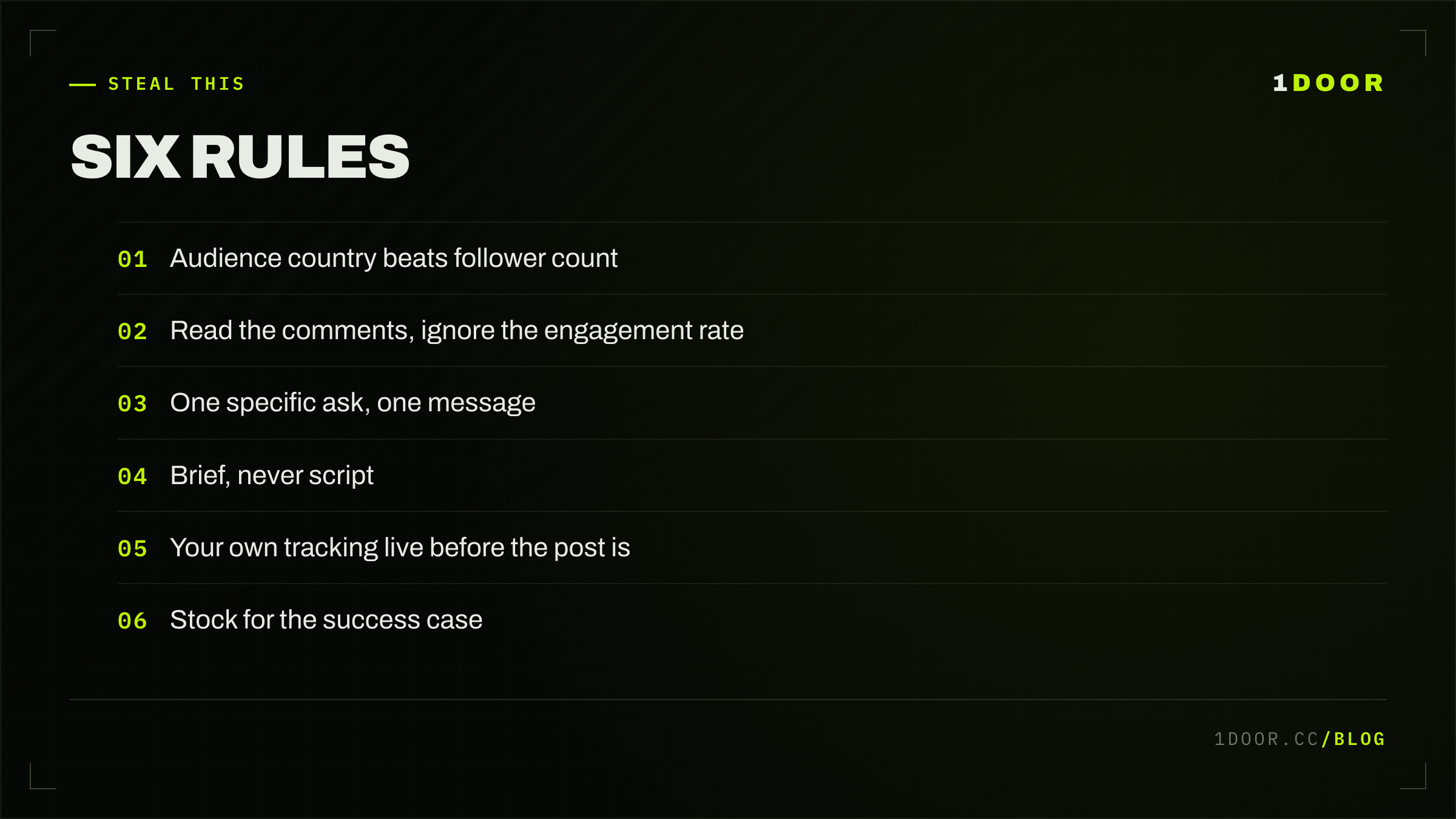
I skipped all of it. Instagram search bar, by hand, scrolling the pet niche until I found the account I wanted. Two million followers — which I checked last, not first, because follower count is the vanity metric that agencies price and outcomes ignore.
Then I sent a DM. Not a rate request. A pitch: here is the product, here is why it is not the twelve other things in this category, here is a brief. Answerable yes or no in one read.
He said yes. I shipped two units and a TOS — one Reels, a Stories sequence, what must be visible, what must never be claimed, where the link goes. A frame, not a script. Nobody good takes a script.
Fee: nothing.
The bill arrived anyway
The Reels landed and demand outran replenishment. Product unavailable for fourteen days.
We do not publish sales numbers, so judge it on what I can name: two units in, zero paid, fourteen days dark. The distance between those figures is the entire lesson.
And understand what an out-of-stock actually costs, because most brands file it under "lost two weeks of sales." Wrong. On a marketplace, availability feeds ranking. A two-week gap does not cost you the two weeks — it costs you the velocity that earned the ranking, and you buy that back at full price.
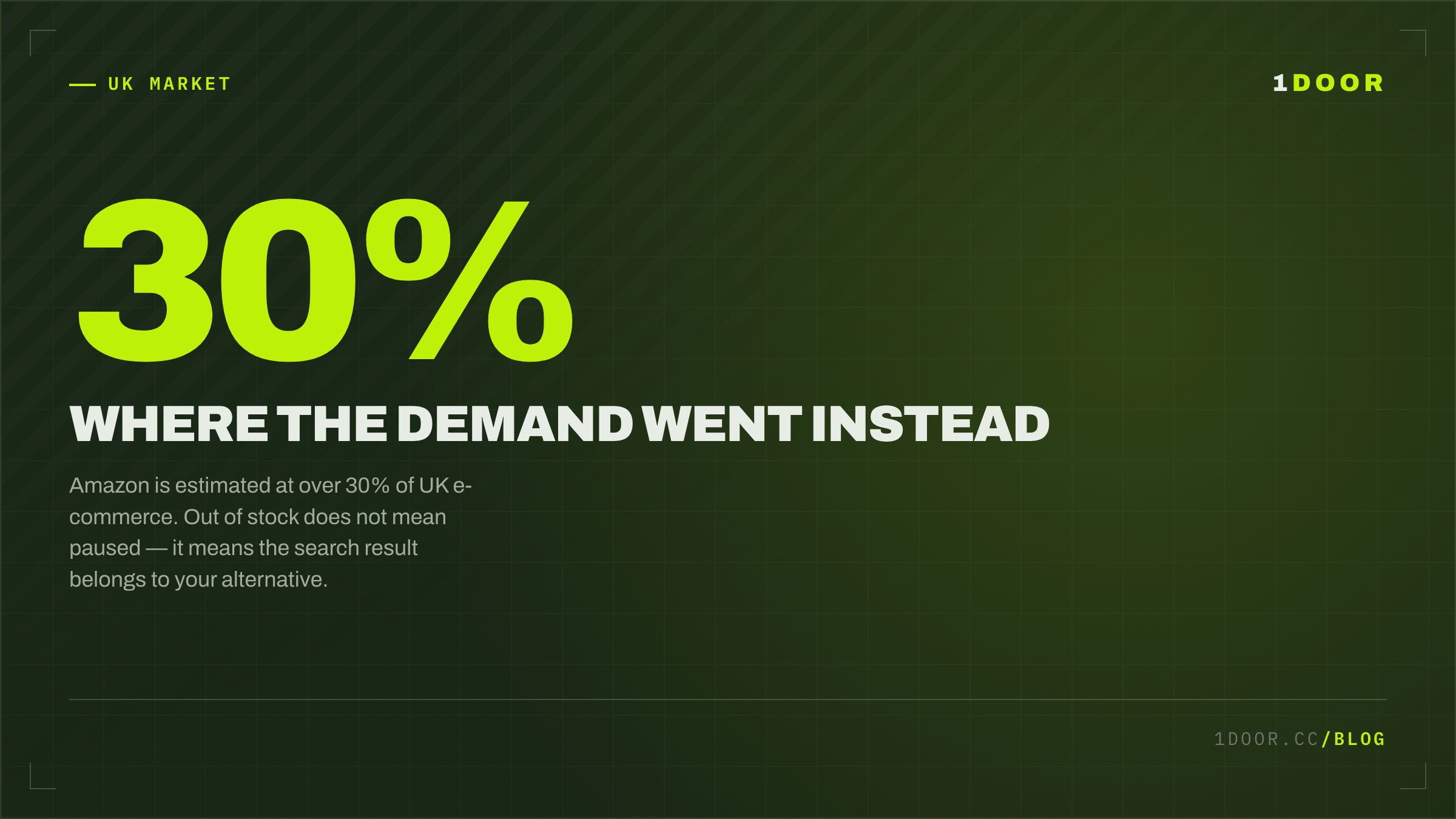
Meanwhile every person who watched that Reels went looking. Amazon is estimated at over 30% of UK e-commerce. A large share of my demand walked into a search result where I did not exist and bought the alternative. Nobody sets a reminder to come back to a brand that was out of stock.
Comments
No comments yet. Be the first.