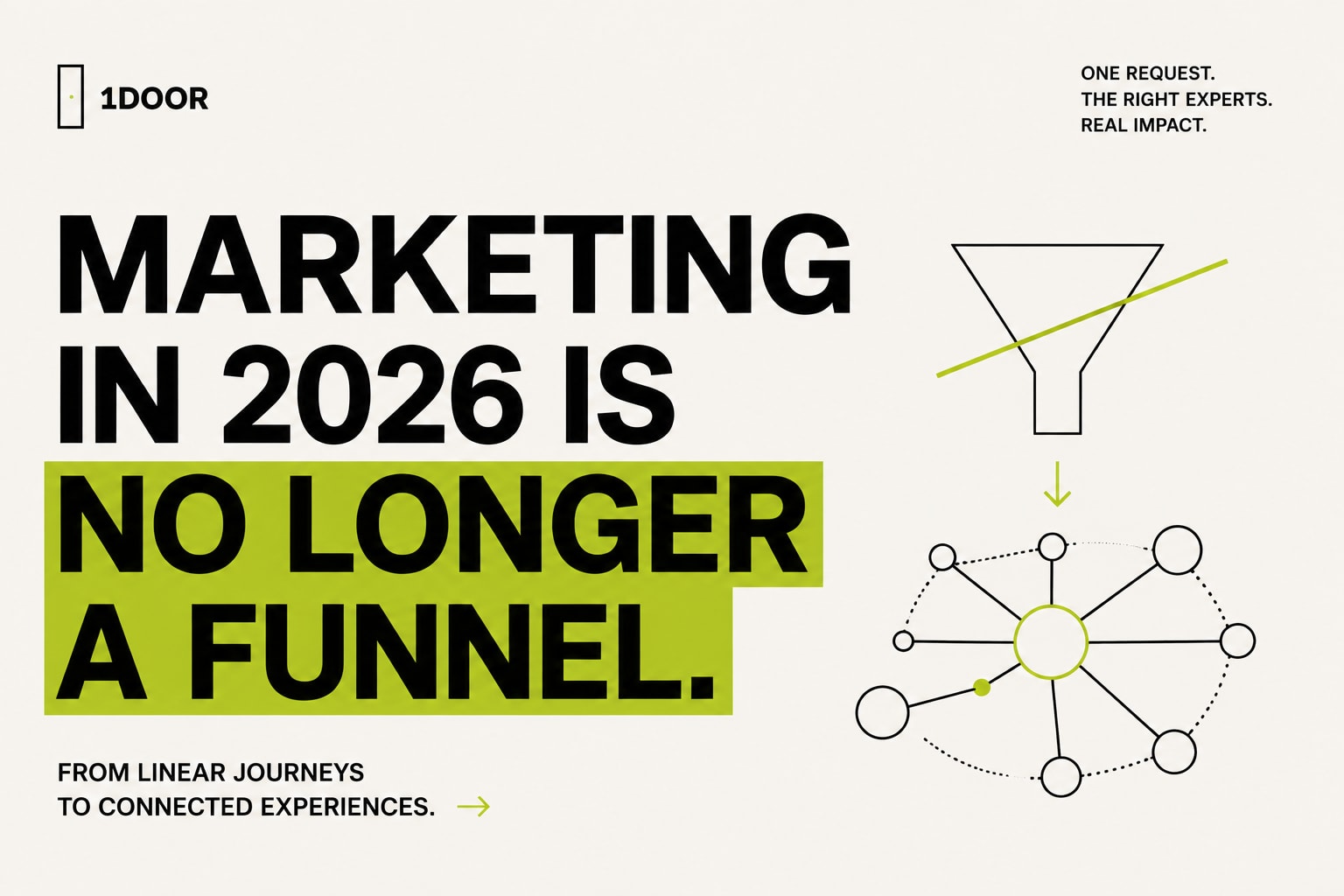
For a long time, marketing was easy to imagine as a simple system: run ads, generate traffic, convert that traffic into sales. The more people you put at the top of the funnel, the more customers should eventually come out at the bottom.
The problem is that customers stopped behaving this way a long time ago.
Today, someone might discover a brand on Instagram, do nothing, see it again through a creator a week later, read some reviews, ask a friend, Google the company, watch a couple of videos on YouTube, leave, come back a month later, ask ChatGPT for alternatives, compare several competitors, and only then return to the website.
Or they might eventually buy through a completely different channel that marketing attribution cannot properly connect to that first interaction.
And all of this is still one customer journey.
CUSTOMERS DON’T LIVE INSIDE OUR FUNNELS
We still like dividing marketing into separate functions: performance handles advertising, SMM handles social media, SEO handles search, CRM handles email, and PR handles reputation.
The customer doesn’t care about our org chart.
To them, there is only one brand.
They don’t think: “I’m currently at the awareness stage, and after my third touchpoint I should move into consideration.”
They are simply collecting information and gradually answering a few questions:
Do I know this company? Do I understand what it offers? Do I trust it? Is it right for me? Why should I choose it over the alternatives?
And those answers come from completely different places.
SEARCH NO LONGER MEANS JUST GOOGLE
One of the most interesting changes in recent years is the emergence of another layer in the decision-making process: AI search.
People increasingly ask ChatGPT, Perplexity, Gemini, Claude and other AI tools questions such as:
“Which one should I choose?”
“Which company is better?”
“Compare these products.”
“What do people say about this brand?”
“What would work best for my situation?”
This creates an interesting new reality: a brand now needs to be understandable not only to people and traditional search engines, but also to systems that gather and interpret information about it from multiple sources.
Reviews, publications, websites, media coverage, expert content, discussions and reputation increasingly work together.
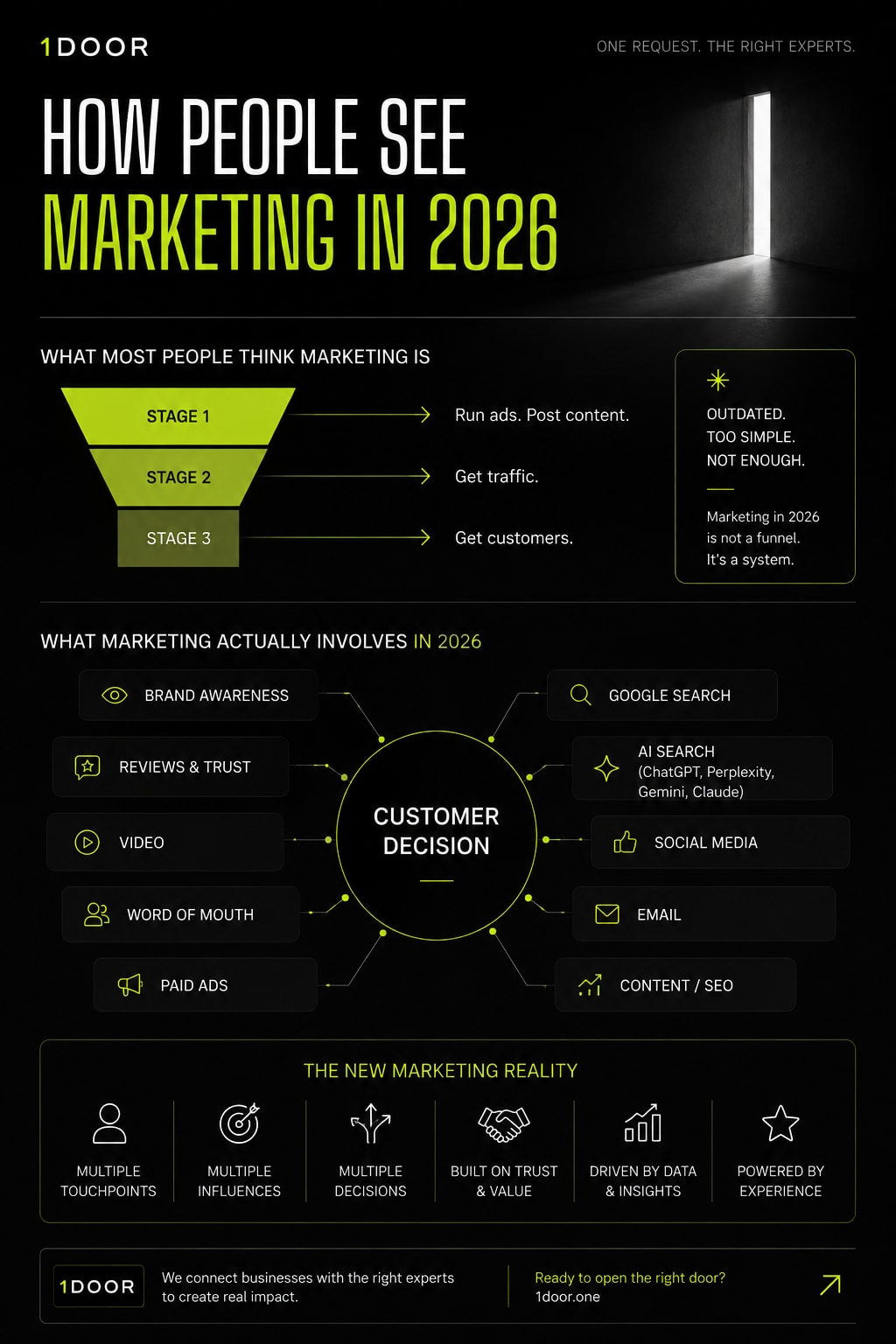
MARKETING IS BECOMING A SYSTEM
Brand awareness creates recognition.
Social media shapes perception.
Video helps people understand the product.
Reviews reduce perceived risk.
Word of mouth builds trust.
Google helps people verify.
AI search helps them compare and understand.
Content answers questions.
Email brings people back.
Paid media accelerates distribution.
But none of these things alone is marketing.
Marketing happens between them.
That’s why asking “Which channel generated this sale?” is becoming less useful.
A better question is:
Which combination of touchpoints helped this person make the decision?
THAT ALSO CHANGES WHAT WE SHOULD MEASURE
Looking only at the last touchpoint can lead to some very bad decisions.
You might stop producing content because it “doesn’t sell.” Cut PR because there is no direct conversion. Ignore reviews because they are difficult to attribute.
And then wonder why performance marketing suddenly becomes more expensive.
Because performance often captures demand that other touchpoints have spent weeks or months creating.
In this environment, clicks and conversions still matter, but so do brand awareness, branded search, traffic quality, repeat interactions, direct traffic, reviews, recommendations, share of search, saves, returning visitors and how easily people can find evidence that your brand is worth choosing.
THE FUNNEL ISN’T DEAD. IT JUST DOESN’T EXPLAIN THE WHOLE PICTURE ANYMORE
The funnel is still useful as an analytical model.
The mistake is treating it as an accurate representation of human behavior.
Reality looks much more like a network: multiple entry points, multiple influences, repeated interactions, constant comparison and plenty of movement backwards and sideways.
So marketing in 2026 is becoming less about asking:
“How do we move someone from point A to point B?”
And more about asking:
“How do we build a system of touchpoints around the customer so that when the moment to decide comes, our brand is visible, understood and trusted?”
That’s where marketing gets much more interesting.
Multiple touchpoints. Multiple influences. Multiple decisions. One customer experience.
Comments
No comments yet. Be the first.