L'Oréal Luxe Australia: a €15.6B strategy, and "REFIILLS" typo
1 DOOR TEAMStrategy & Consulting · 27 July 2026
My name is Michael, and I'm a Head of Digital sharing a bit of marketing magic, plenty of knowledge, and a lot of dedication.
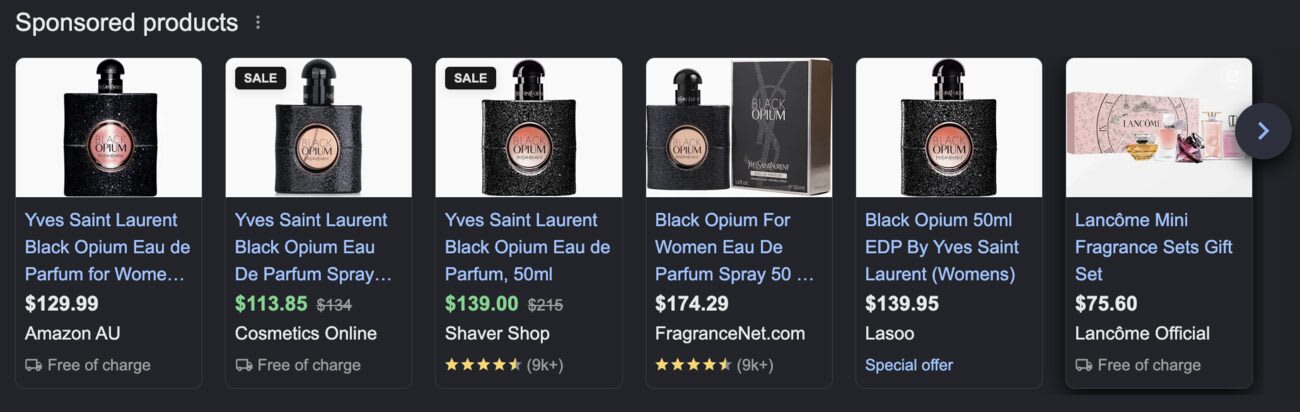
We went to buy YSL Black Opium the way a real Australian shopper does. We searched for it.
The first sponsored result was Amazon AU at $129.99. YSL's recommended retail price is $215. Before we ever reached the brand, it had already lost 40% of its price and every word of its story.
No complaints on our side, though. The only unhappy party here is the YSL brand team, and its P&L (possibly).
Google Shopping, YSL Black Opium: a $215 fragrance sold by resellers from $113.85, the sponsored row owned by Amazon AU and marketplaces.
This is a luxury house that can sell you a €300 fragrance across a marble counter in eight unhurried minutes. Online, in Australia, it is losing the first impression to a reseller in a grey box. Let's see the full story.
The short version
Desire — beautiful brand worlds, undercut by live typos (REFIILLS, RECYLCLE), staging URLs in production, and a US phone number in an Australian footer. Intelligence — the brand loses its own sponsored search to Sephora and resellers, and key sites are invisible to AI shopping agents. Seamlessness — one perfume, four prices, four doors. Devotion — refills and loyalty clubs exist but aren't wired into a reorder loop, and on marketplaces the second purchase can slip to a third-party seller. This is not a brand problem. It is a shelf the brand stopped staffing to its own standard.
The houses in question. L'Oréal Luxe's portfolio spans Lancôme, Yves Saint Laurent, Giorgio Armani, Valentino, Kiehl's, Prada, Miu Miu, Aesop, Jacquemus, Youth To The People, Urban Decay, Helena Rubinstein, Biotherm, Maison Margiela, Mugler and more — thirty-odd houses, one Culture de l'Écart.
What do those houses look like online?
They open on a sale. Here is the disconnect in four screenshots, and none of these is a broken edge case dug out of a sub-page. They are the front doors.
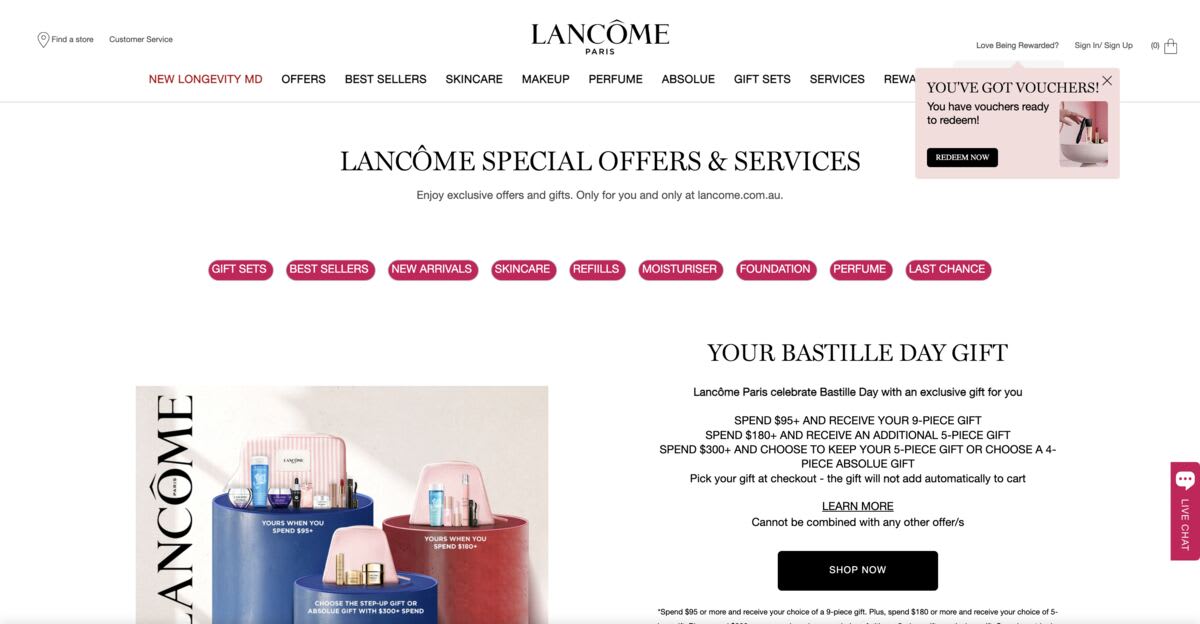
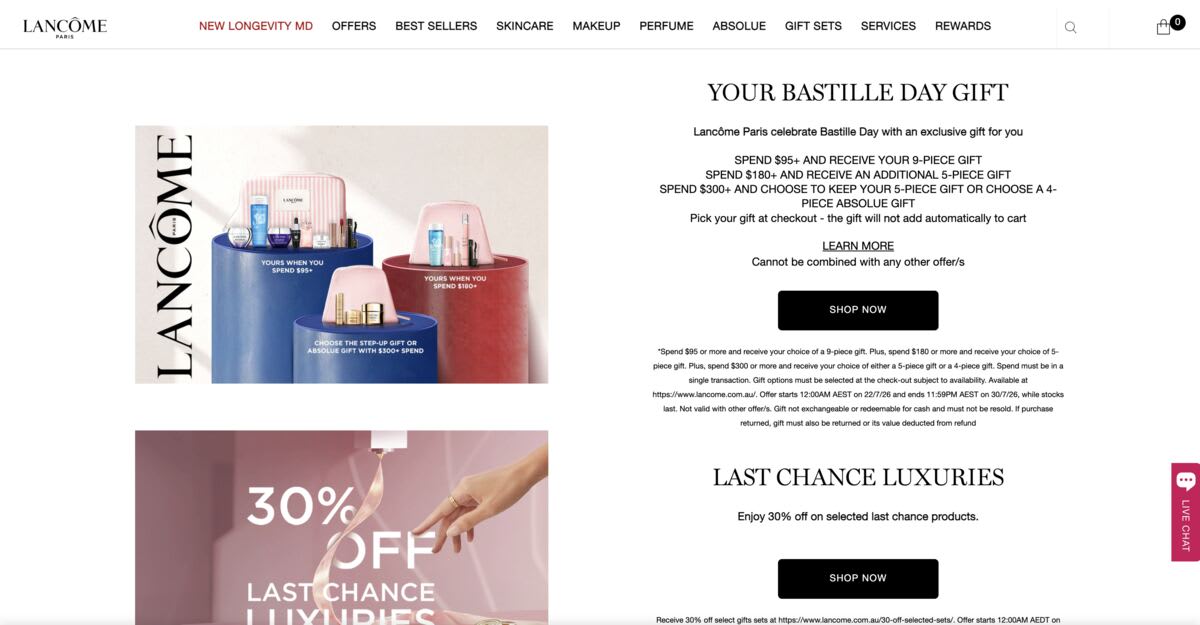
Lancôme AU opens on a row of neon discount pills — one of them a mis-spelled REFIILLS.
Spend-tier gifting and 30% OFF LAST CHANCE LUXURIES as the headline offer.
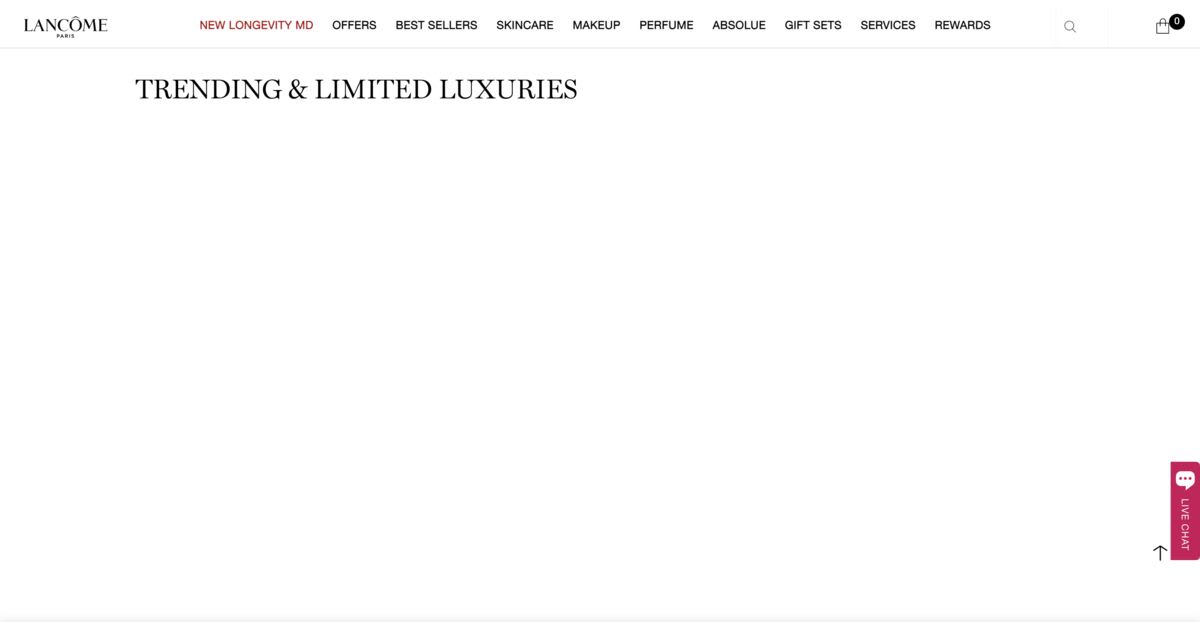
Trending & Limited Luxuries — a heading sitting above an empty white void.
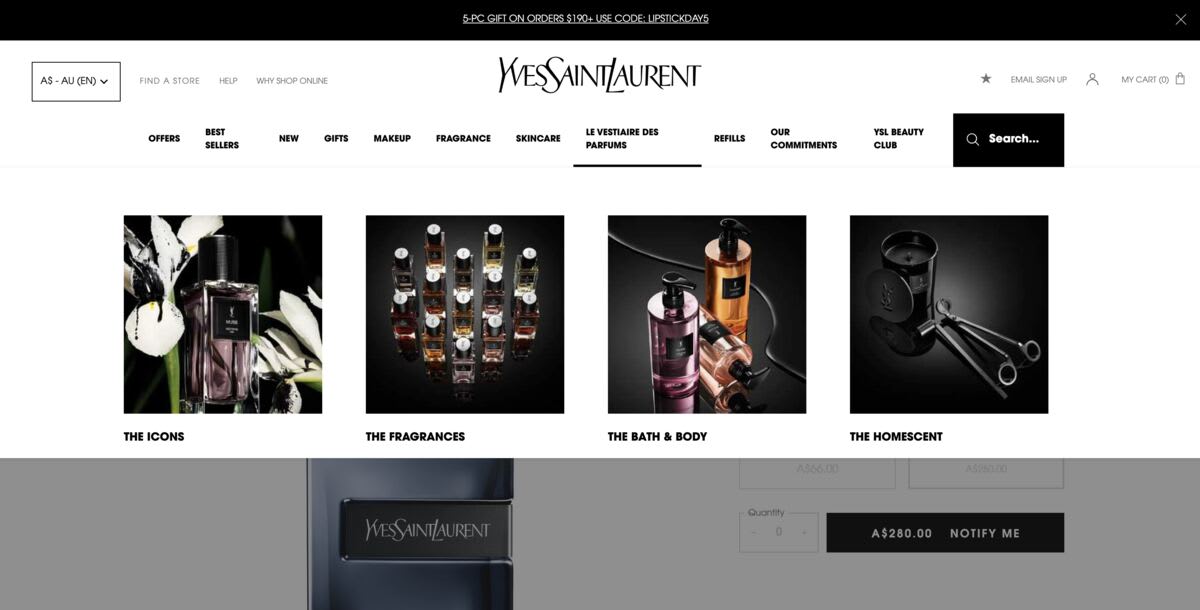
YSL is cleaner, but the hero product is out of stock: a grey NOTIFY ME.
A luxury counter never greets you with a wall of neon 30% OFF and a spend-and-get gift ladder. These pages lead with the discount, not the brand.
A vouchers pop-up ambushes the first scroll. A REFIILLS typo sits inside a hot-pink pill, and the section titled Trending & Limited Luxuries renders as an empty gap. It reads like a pharmacy catalogue, not a maison.
The rubric, and whose it is
These four pillars are L'Oréal Luxe's own. They are how the house defines a luxury purchase, and exactly what a good advisor delivers at a Lancôme counter on Bourke Street. We did not set this standard — we are only holding the website to the one L'Oréal already set for itself.
I · Desire — luxury is storytelling: editorial content, immersive product pages, elevated merchandising. II · Intelligence — luxury is personal: diagnostics, advisory, data, and being found in the first place. III · Seamlessness — luxury is effortless: one journey, one price, one story, zero friction. IV · Devotion — luxury is a relationship: loyalty, replenishment, refills. The second purchase is the real KPI.
We clicked through the Australian estates of Lancôme, YSL and Kiehl's, plus how those brands show up on Mecca, Adore, Amazon AU and Chemist Warehouse. Four pillars, four verdicts: Desire is cracked, Intelligence is losing, Seamlessness is fractured, Devotion is unclaimed.
Pillar I · Desire: the spell breaks on a typo
Desire is the pillar L'Oréal Luxe should win in its sleep, and the design mostly does. Then the details betray it. One careful pass surfaced this, in the audit's own words:
Staging URLs leaking into production on Lancôme and YSL; live-nav typos (REFIILLS, RECYLCLE); US phone numbers in Kiehl's AU footer; contradictory free-shipping thresholds across two of three sites.
Blocker. A misspelled navigation label is a smudge on the glass of the boutique. It is small, and it is everything, because desire is built on the sense that every detail was chosen. A US phone number in an Australian footer says the page was copied, not made for her.
Unlock. None of this is a redesign. It is a pre-publish checklist: a spell pass on every live string, staging domains that cannot resolve in production, a localised footer per market, and one shipping threshold that matches across every property.
Pillar II · Intelligence: losing your own name in search
Intelligence is knowing where your shopper is and being there first. On the searches a brand should own outright — its own name — L'Oréal Luxe is getting outbid on its own doorstep.
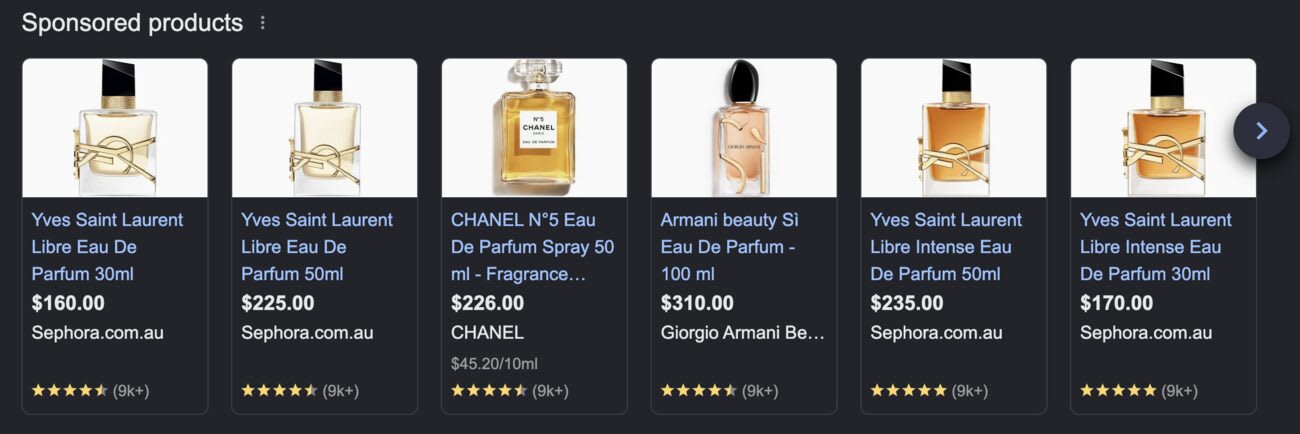
On YSL's and Armani's own brand terms, Sephora.com.au holds most of the sponsored row. The retailer is buying the brand's name; the brand is not defending it.
Blocker. Google Shopping campaigns run without the brand's own keywords, so Sephora and resellers collect the intent the brand paid to create. Armani, meanwhile, spends on competitor keywords, which almost never pays back.
Sephora PDPs and the entire Armani AU site are JS-only shells — invisible to crawlers and AI shopping agents.
More shoppers now ask an assistant to find and compare before they open a tab. A site the assistant cannot read is a site it cannot recommend. Google's own guidance is blunt that content rendered only in the browser is indexed less reliably than content already in the HTML.
Unlock. Bid on your own brand terms first. Rebuild the Shopping feed so branded queries return the brand, not a marketplace. Then render product-page content into the HTML at build time, so an AI agent can read the price, the ingredients and the reviews.
Pillar III · Seamlessness: four prices for one perfume
Seamlessness means the shopper meets one brand, not five versions of it. In Australia, a single fragrance meets her at four different prices depending on which door she opens.
YSL Black Opium 50ml is $215 at RRP, but $129.99 at both Chemist Warehouse and Amazon AU — a 40% cut. Lancôme La Vie Est Belle is full price at Mecca ($168.81), out of stock at Adore, and grey-market on Amazon at $129.99.
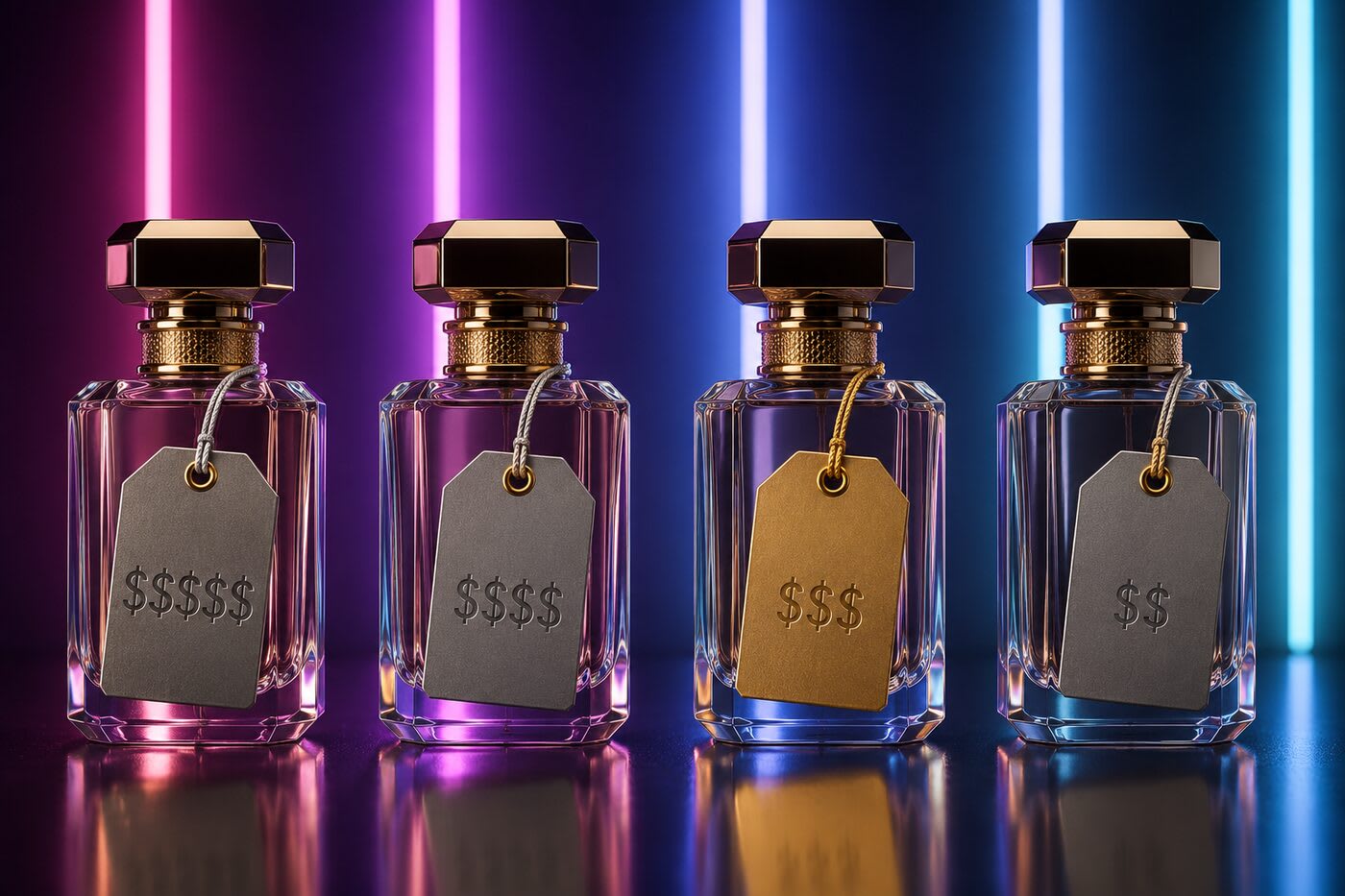
Illustrative: one fragrance, priced by whichever door the shopper opens.
Blocker. Chemist Warehouse and Amazon set the consumer's price anchor 30–40% below RRP. Once a shopper has seen Black Opium at $129.99, the $215 on the brand's own site reads as a markup, not a premium.
Unlock. This is price governance, not price cutting. Set and police a minimum advertised price with every authorised partner, sync stock so the brand never sends a ready buyer to an empty shelf, and align one shipping rule across every owned property.
Pillar IV · Devotion: the reorder nobody owns
Devotion is where luxury actually earns out: the second purchase, the refill, the replenishment. On the Australian storefronts the pieces exist, but the loop that uses them does not.
Blocker. YSL runs a Refills range and the YSL Beauty Club; Lancôme carries refills and My Lancôme Rewards. The intent to keep customers coming back is clearly there. What is missing is the loop: the refill is sold as a one-off product rather than wired into a subscribe-and-remind flow, and the loyalty clubs sit beside the reorder instead of driving it.
Marketplaces widen the exposure. Wherever a listing is fulfilled by a third-party seller instead of the brand, the reorder — luxury's highest-margin and highest-loyalty moment — leaves the brand's hands along with its first-party data.
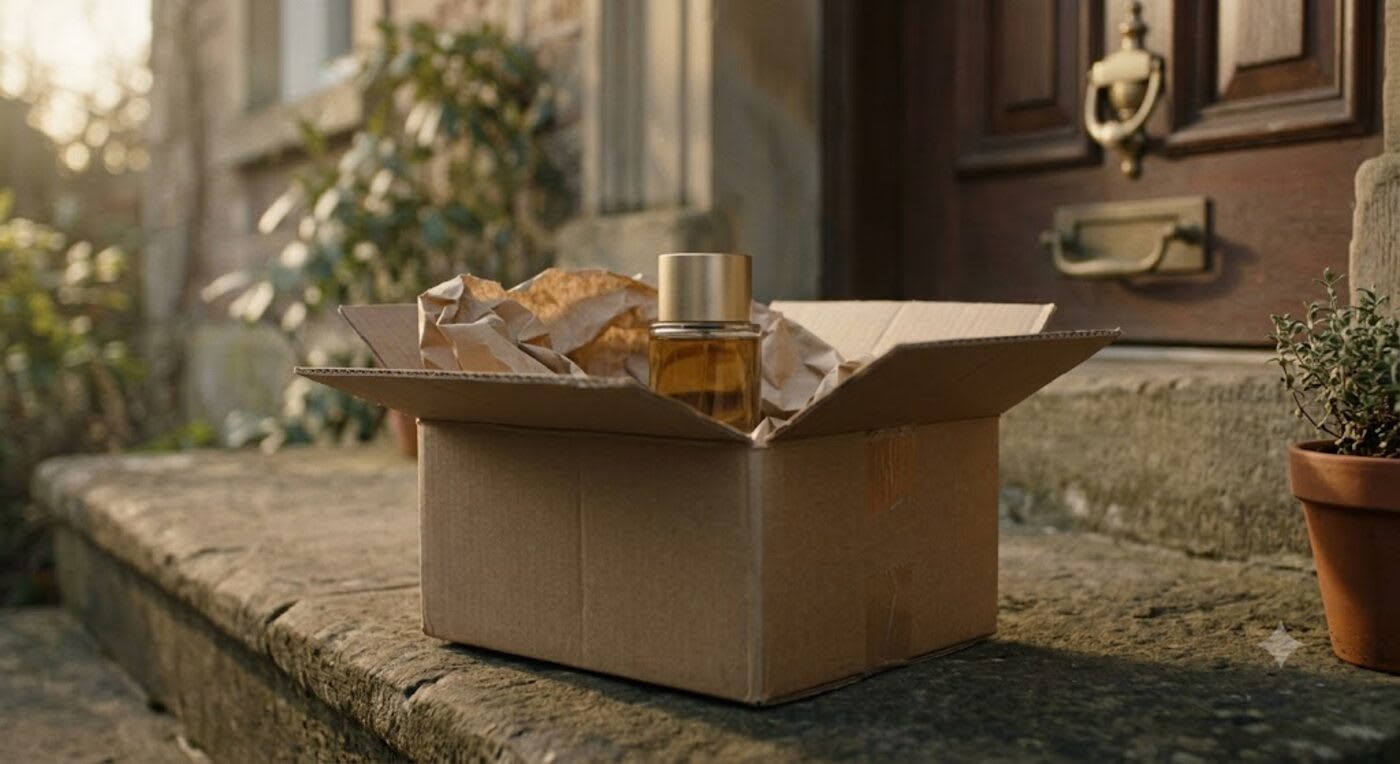
Illustrative: the reorder arrives in a plain box the brand never got to choose.
Unlock. Own the reorder. Turn the existing refills into a subscribe-and-save flow, let the loyalty clubs do the reminding, and wherever the brand sells through a marketplace, control the listing so the second purchase stays first-party. Devotion is a system, and most of its parts are already on the sites. They just aren't connected.
An audit that stops at this is wrong is half an audit. Reseller anchoring pressures margin on the highest-margin D2C channel. Lost branded search inflates blended CAC. Invisible product pages mean silent exclusion from AI discovery. An unowned reorder loop leaks repeat-purchase margin and first-party data. Typos and staging leaks corrode trust at the exact moment of desire. Figures are working assumptions, to be validated against internal data.
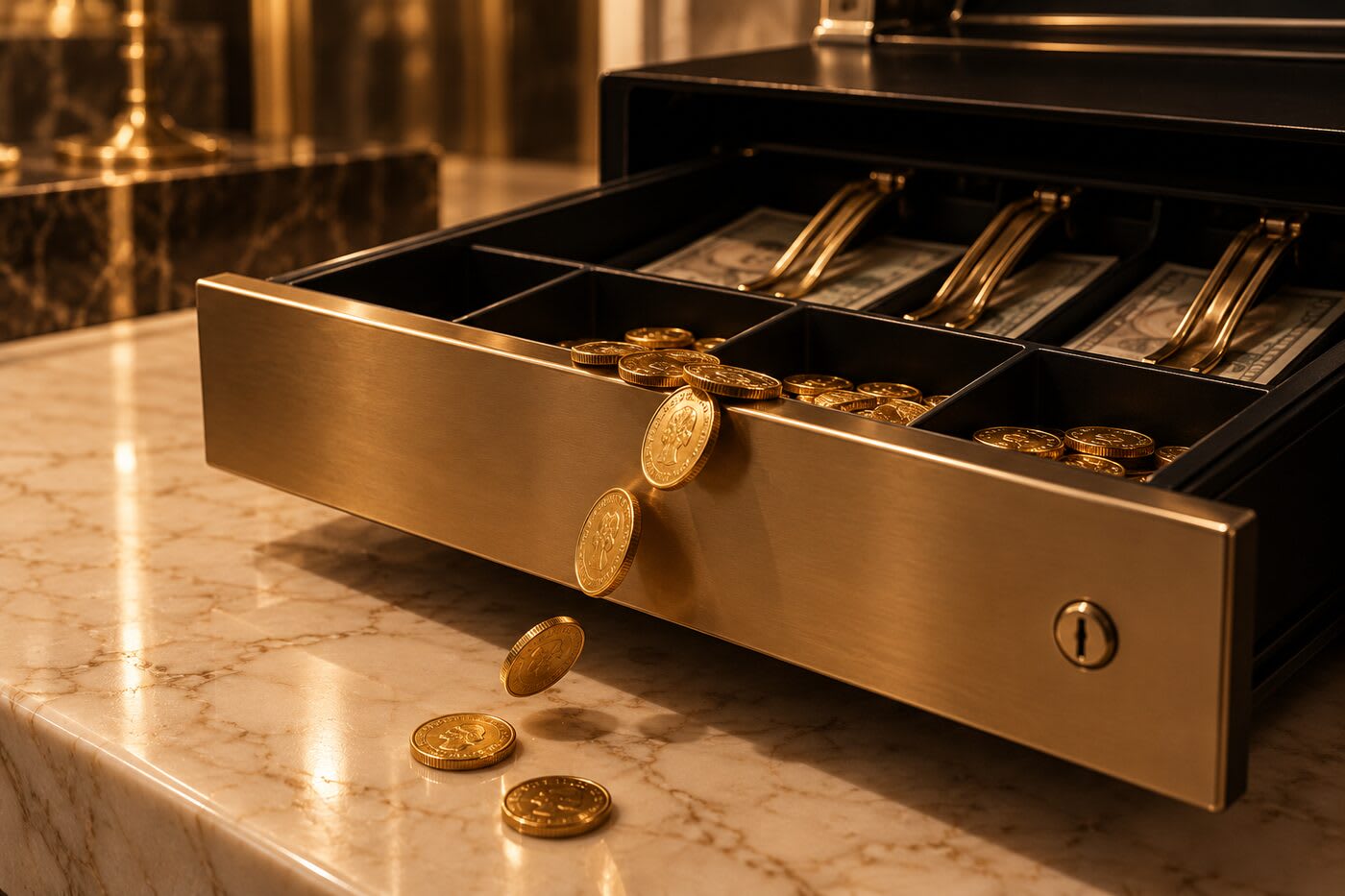
Illustrative: the reorder margin and first-party data, quietly leaking out.
Where is this being fought?
D2C matters most because it is the only door where the brand controls all four pillars at once. Everywhere else it shares control with a retailer.
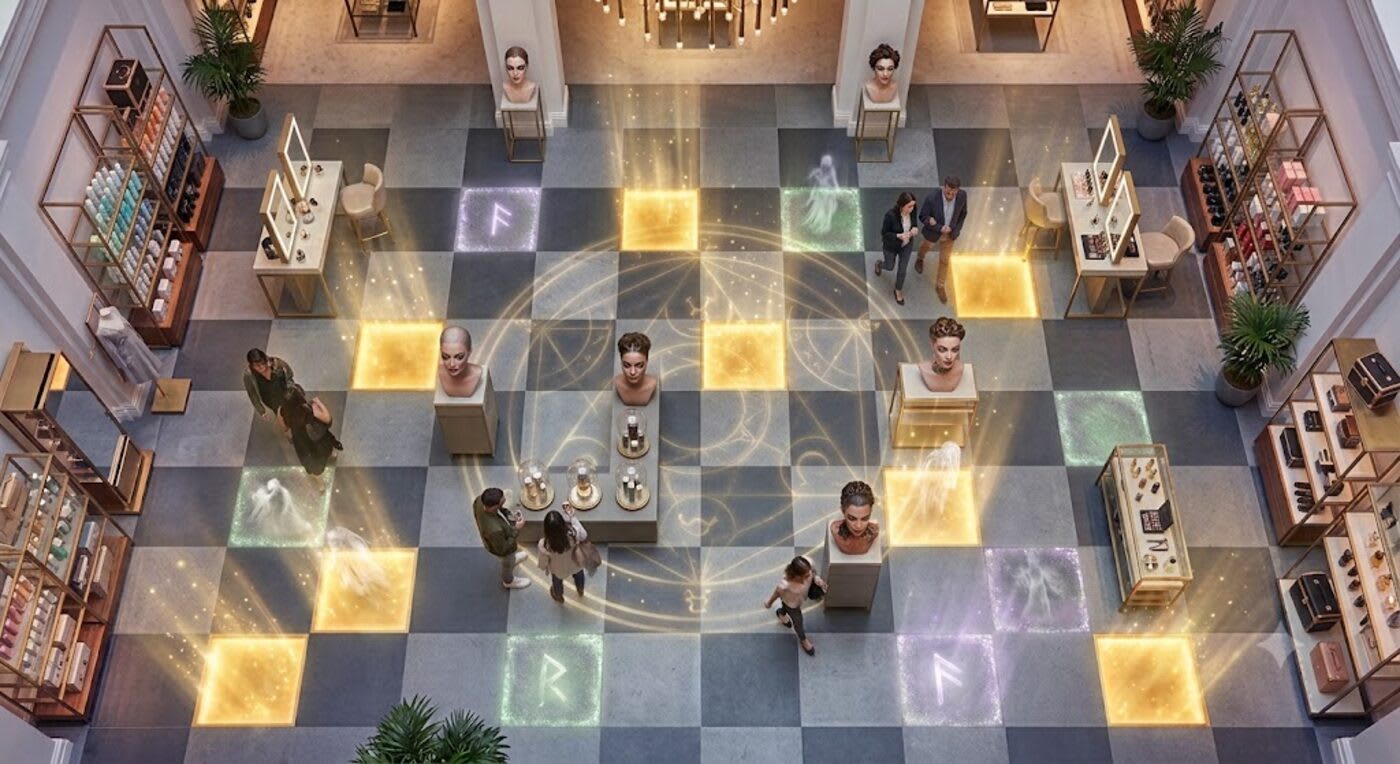
Illustrative: the Australian board — a few squares owned outright, most shared with a retailer.
Roughly, the Australian board weighs like this: Mecca around 35% of the Luxe-relevant online opportunity, D2C brand sites around 20%, Sephora AU around 12%, Amazon AU around 8% — a working read, to be validated with internal data.
Luxury didn't lose its experience. It just stopped shipping it to the URL.
None of these findings mean the brands are weak. The stories are gorgeous, the products sell themselves, and the counters still deliver all four pillars in eight minutes flat. That is exactly why the digital gaps sting: the bar was set by the same house, in the same city, on the same customer.
Here is the opinion we will put our name on: in prestige beauty, the price is part of the product. Bain & Company's luxury studies have argued for years that discounting erodes pricing power faster than it adds volume, so a brand that lets a marketplace anchor it 40% low has already discounted the story, not just the bottle.
What we can do about it
The price anchoring, the lost search share, the invisible product pages, the ceded reorder — this is the work we do for premium brands every week. A sample from our shop:
Not sure where your gaps are? Our competence game lets you, or your whole team, answer a short set of questions and see your real level across digital, e-commerce and CX. We read the results and map which gaps to close first.
Questions we'd expect
Aren't cheaper prices at Chemist Warehouse good for the shopper?
For one transaction, yes. For the brand, a permanent 40%-under anchor teaches every shopper that full price is a mistake, which erodes the pricing power the whole luxury model depends on. The fix is not higher prices, it is authorised prices that hold across channels.
Is being invisible to AI agents really a problem today?
It is a small problem now and a structural one soon. A product page an assistant cannot read is quietly excluded from the shortlist it builds, and that exclusion grows as agent-led shopping scales.
Whose fault is the reseller pricing, the brand's or the retailer's?
Both, and it does not matter to the shopper comparing tabs. We're maybe 70% sure some of these listings are diverted stock rather than authorised, but the brand still owns the outcome, because minimum-advertised-price governance is the brand's lever to pull.
What would you fix first?
Price governance and search. Stop the marketplace anchoring the price and owning the brand's own name in Shopping; both protect margin directly, and they buy time to fix hygiene and marketplace control properly.

Comments
No comments yet. Be the first.